 Skip to content

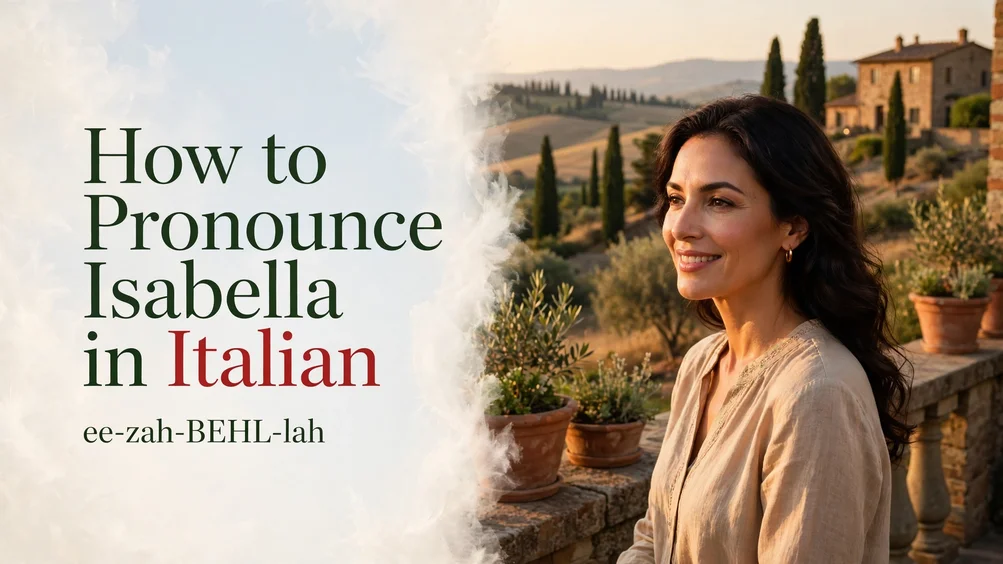
In Italian, Isabella is pronounced ee-zah-BEHL-lah, with the stress on the third syllable, BEHL. The name has four syllables, ee-zah-BEHL-lah, and the final A sounds like the A in father, never like a flat uh. At ItalianGirlNames.com, we start with the Italian form because Isabella is an Italian name first, and the English version came later.
English speakers usually say iz-uh-BEL-uh, and that version is fine in English conversation. But if you want to learn how to pronounce Isabella the way an Italian family would say it, three changes do the work: voice the S into a Z, hold the double L a beat longer, and open the vowels wider.
The Italian Pronunciation, Syllable by Syllable
Isabella has four syllables in Italian: ee, zah, BEHL, lah. Stress falls on the third syllable, BEHL, and every vowel is pronounced clearly, with no swallowed sounds. The IPA spelling is [izaˈbɛlla], and you can build the name from those four sounds one piece at a time.
Sound by sound
| Syllable | Sound | How to say it |
|---|---|---|
| ee | ee as in see | Bright and short, never stretched |
| zah | zah with a Z | The S between vowels turns into a Z |
| BEHL | BEHL with a long L | The stressed syllable, hold the L |
| lah | lah as in father | Open A, never a flat uh |
Say the four pieces slowly, ee-zah-BEHL-lah, then speed up until they flow into one word. Keep the stress on BEHL the whole time. If the stress drifts to the first syllable, you are back in English territory, so slow down and start again from the stressed syllable.
The double L: hold it longer
Italian doubles its consonants, and the LL in Isabella is a real double. Hold the L sound about twice as long as you would in English. Compare bella and bela: the first has weight, the second sounds thin, and that weight on the L is the difference. Chiara hides a similar trap, a soft sound in plain spelling, and our guide to how to pronounce Chiara breaks it down the same way.
The S that sounds like Z
The S in Isabella sits between two vowels, and Italian voices it into a Z in that position. So the middle of the name sounds like zah, not sah. English does the same thing in words like music and reason, where the S buzzes, so the sound is already in your mouth. Once you hear the Z, the Italian version clicks.

Italian vs English: Where Most People Slip
The English version, iz-uh-BEL-uh, is fine in English, and it differs from the Italian form in three places: the first vowel, the S sound, and the double L. English flattens the vowels into schwas and rushes the L, while Italian keeps every vowel open and stretches the L.
The three mistakes to avoid
| Mistake | What happens | Fix |
|---|---|---|
| ih instead of ee | The first vowel turns into a short ih | Start with a bright ee, as in see |
| sah instead of zah | The S stays voiceless | Buzz the S into a Z between the vowels |
| Short single L | The double L collapses | Hold the L twice as long, on BEHL |
Most English speakers make all three mistakes at once, which is why the name can sound like a different word entirely. Fix one at a time, starting with the vowels, because open vowels change the whole shape of the name. Add the Z next, then stretch the L last.
The shortened three-syllable version
In casual speech you will sometimes hear iz-BEL-uh, with the middle syllable dropped. Italians do not shorten the name this way, and the three-syllable form loses the rhythm that makes Isabella sound Italian. Keep all four syllables, even when you speak quickly, and let speed come from fluency.
Practice It Until It Sticks
Five minutes of focused practice is enough to lock in the Italian pronunciation. Work through the sounds one at a time, then put the whole name together, then test it against a surname. Say everything out loud; silent reading does not train your mouth.
A five-minute drill
- Say ee five times, bright and short.
- Say zah five times, buzzing the Z.
- Say BEHL five times, holding the L.
- Say lah five times, open like father.
- Put them together slowly three times, then at normal speed three times.
If one syllable keeps slipping, practice it alone for a minute before you rejoin the full name. The BEHL syllable is usually the sticky one, because English speakers want to rush past the double L. Slow it down on purpose until the long L feels normal. The same slow-build drill works for other Italian names too, and our guide to how to pronounce Giulia walks through it the same way.
Say it with your surname
A name is only half the test; it has to sound right with the surname that follows it. Say ee-zah-BEHL-lah with your family name three times, listening for clashes on the L or a pile-up of vowels. If the pair flows, the Italian pronunciation is doing its job. If it trips, try the nickname Bella with the surname and compare.
What Isabella Means and Where It Comes From
Isabella is the Latinate form of Isabel, which comes from the Hebrew name Elisheba, meaning “pledged to God” or “God is my oath.” It reached Italy through medieval French and Spanish forms, and it has been used as an Italian name for centuries, carried by queens, saints, and artists. For the full story of the meaning, the Elisabetta link, and the nicknames, see what Isabella means in Italian.
From Elisheba to Isabella
The path runs from Hebrew Elisheba through Greek and Latin Elizabeth, then to medieval Isabel, and finally to the longer Latinate Isabella. Each step softened the sound a little and stretched the name out, which is why Isabella feels more flowing than Elizabeth. Behind the Name records it as the Latinate form of Isabel, borne by medieval queens across Europe.
The name day: July 4
Isabella’s name day is traditionally kept on July 4, the feast of Saint Elizabeth of Portugal, who was known as Isabel in Spanish and Portuguese. Families in Italy mark the onomastico the way others mark a second birthday, with a phone call or a small gift. The date is shared because Isabel and Isabella are forms of the same name.


Nicknames, Variants, and Spellings
Bella is the nickname most Italians reach for, with Isa and Izzy close behind. The full name also travels well: Isabelle is French, Isabel is Spanish, and Isobel is Scottish, but the spelling Isabella stays the same in Italian and English, so only the pronunciation changes.
Nicknames that keep the Italian sound
Bella keeps the double L and the open A, so it sounds Italian even on its own, and it is the short form most people outside Italy already know. Isa is shorter and works in almost every language, while Izzy leans English and Ella leans soft and modern. Pick the nickname that fits the child, not the one that is trending, because a nickname sticks for years.
Spellings that change the sound
Isabelle, Isabel, and Isobel are real forms of the same name in French, Spanish, and Scottish use, and each one sounds a little different from Isabella. Izabella and Isabetta are newer spellings that look more phonetic but are not the standard Italian form. If you want the Italian sound, keep the double L and the final A exactly as they are.
Famous Isabellas Who Carry the Name
Isabella has been carried by queens, artists, and modern stars, and hearing the name on real people is the fastest way to fix its sound in your ear. Isabella of Castile ruled Spain, Isabella Rossellini carried it onto the screen, and Isabella d’Este shaped the Renaissance courts of Mantua.
- Isabella of Castile, queen of Spain
- Isabella Rossellini, Italian actress
- Isabella d’Este, Marchesa of Mantua
- Isabella Stewart Gardner, art collector
- Isabella “Bella” Swan, heroine of the Twilight books and films
Notice how the name stays the same across centuries and countries while the pronunciation shifts with the language. The Italian form is the oldest of the bunch. Say each bearer’s name out loud in the Italian way.
Frequently Asked Questions
Is the S in Isabella pronounced like Z?
Yes, in Italian. The S sits between two vowels, and Italian voices it into a Z in that position, so the middle of the name sounds like zah. English does the same thing in words like music and reason, where the S buzzes. The English version of the name keeps a Z sound too, in iz-uh-BEL-uh.
How many syllables does Isabella have?
Four: ee, zah, BEHL, lah. The stress falls on the third syllable, BEHL. Some English speakers drop a syllable and say iz-BEL-uh, but the Italian form keeps all four. Keeping every syllable is what preserves the name's Italian rhythm.
What does Isabella mean?
Isabella means "pledged to God" or "God is my oath." It is the Latinate form of Isabel, from the Hebrew name Elisheba, and it reached Italy through medieval French and Spanish forms. The name has been used in Italy for centuries, carried by queens and artists.
What are the most common nicknames for Isabella?
Bella is the best known, with Isa, Izzy, and Ella close behind. Bella keeps the double L and the open A, so it sounds Italian even on its own. Isa works in almost every language, while Izzy leans English and Ella leans soft and modern.
When is Isabella's name day?
Isabella's name day is traditionally kept on July 4, the feast of Saint Elizabeth of Portugal, who was known as Isabel in Spanish and Portuguese. The date is shared because Isabel and Isabella are forms of the same name. Families in Italy mark the onomastico with a call or a small gift.
Conclusion
Say it slowly once more, ee-zah-BEHL-lah, and the Italian version should feel natural now. If Isabella is on your shortlist, compare it with the other Italian girl names starting with I before you decide, and say each one out loud with your surname.


