 Skip to content


What Does Serena Mean in Italian
Serena means “clear, tranquil, serene” in Italian. It comes from the Latin word serenus, which first described a clear, cloudless sky and then a calm, untroubled person. Italians say it seh-REH-nah, with the stress on the middle syllable. The name has been in use since Roman times, and it carries a saint’s name day on August 16.
If you are weighing Serena against other Italian names, the shortlist at ItalianGirlNames.com puts it beside its closest cousins, so you can hear how its soft, open sound compares with names like Selena and Marina. Serena stands out there because its meaning is plain to hear: the name sounds like what it means.
Clear as a Summer Sky: What Serena Means
Serena means clear, tranquil, and serene. The three words come from one Latin root, serenus, and they describe the same quality from three sides: a sky with no clouds, water with no ripple, and a person with no hurry. That is why the name feels calm the moment you hear it, and why parents keep choosing it.
The Latin root serenus, a clear sky
Latin serenus was first a weather word. Roman writers used it for a bright, cloudless sky and for still water after a storm, and only later for a person’s temper. Serena is the feminine form of that word, so the name carries the weather picture with it: a clear morning, nothing pressing, nothing hidden. Behind the Name traces it the same way, from Latin serenus meaning “clear, tranquil, serene”.
The root also gives English the word serene, which arrived in the 1400s with the same weather sense. That shared root is why Serena needs no translation. A parent in Rome and a parent in Chicago hear the same calm in it, though one says seh-REH-nah and the other says seh-REE-nah.
Clear, tranquil, and serene, three shades of one word
The three glosses are not three different meanings; they are one meaning seen from three angles. Clear is the sky, tranquil is the mood, and serene is the person who holds both. Parents who pick Serena usually mean the third one. They want a name that promises steadiness rather than excitement, and Serena delivers that promise in three syllables.
That steadiness is also why the name suits a child at every age. It sounds gentle on a baby, composed on a schoolgirl, and professional on an adult. Few names keep their meaning so visible through a whole life, and Serena is one of them.
The mermaid mix-up: Serena is not a siren
Some baby-name sites list “mermaid” as one of Serena’s meanings and trace the name to Greek. That is a mix-up, and it comes from sound alone. The Greek word for the mythical sirens is Seiren, which sounds close to Serena but has no link to it. Serena is Latin from start to finish, and no Greek source supports the mermaid reading.
The confusion is easy to understand, since both words end in a soft n sound and both suggest the sea. But the two names point in opposite directions: a siren lures sailors to danger, while serenus describes a sky with no danger in it. Parents who want the sea should look at Marina instead.
Serena of Rome: The Saint Behind the Name Day
Serena’s name day falls on August 16, the traditional feast of Saint Serena of Rome. She is a legendary third-century saint from the old Roman martyrology, remembered as a Christian in the court of Emperor Diocletian. Her story is old and much loved, even though historians doubt parts of it.
August 16, the traditional feast
The old Martyrologium Romanum placed Saint Serena’s feast on August 16, and Italian calendars kept that date long after the saint was removed from the current calendar. Families with a Serena still mark the day in mid-August, often with a small gathering while summer is at its height. The date is the one fixed point in her story, and every source that names her agrees on it.
The Diocletian story, and why historians doubt it
Tradition says Serena was the wife of Emperor Diocletian and a secret Christian who defended persecuted believers in his court. The story comes from the Acts of Saint Susanna and Saint Marcellus, where the empress steps in to protect Christians from her husband’s persecution. It is a brave story, and it gave the name its early link to courage under pressure.
Historians doubt the marriage itself. Lactantius, a Christian writer who lived at Diocletian’s court, names Prisca and Valeria as the emperor’s wife and daughter, not Serena. The current martyrology leaves Serena out for that reason, and scholars call her existence doubtful. The name day survives anyway, because devotion to her is older than the doubt.
The Spoleto mix-up, cleared up
Some modern write-ups call Serena a martyr of Spoleto. That is wrong. Her tradition belongs to Rome, not Spoleto, and no early source ties her to the Umbrian city. The mix-up likely comes from the many Umbrian saints with similar stories, but Serena’s name day, her court story, and her patronage of Foglia in Lazio all point to Rome. Her city is Rome, and the sources agree on that.
How Italian families mark August 16
In Italy, a name day is a smaller, warmer celebration than a birthday, and Serena’s falls in the middle of the Ferragosto season. Families often mark it with a phone call, a small gift, or a cake shared after dinner, since many relatives are already together for the August holiday. The saint’s story is rarely discussed at the table; the date itself is the celebration.
The Italian Sound of Serena: seh-REH-nah
Italians say Serena as seh-REH-nah, three syllables with the stress on the middle one. The first e is open like the e in set, the r rolls lightly, and the final a is clear and unhurried. English speakers usually shift the stress and say seh-REE-nah, which Italians understand but never use themselves.
Three syllables, stress on REH
Say it slowly: seh, REH, nah. The middle syllable carries the weight, and the first and last syllables stay light. That balance is what makes the name sound calm; no syllable rushes, and none drags. Italian children learn it early because every letter is pronounced and every vowel is open, so there is nothing to guess at.
The English shift to seh-REE-nah
English speakers move the stress to the second syllable and lengthen it, giving seh-REE-nah or suh-REE-nuh. That version is correct in English and is how Serena Williams says her own name. One baby-name site gives “seh-RAY-nah” as the English form, but that is wrong. Families between the two languages usually keep seh-REH-nah at home and accept seh-REE-nah outside it.
Serena, Serina, and Séréna on paper
The standard Italian spelling is Serena, with one r and one n. Serina is a common variant in Italy and abroad, and Séréna is the French form with an accent on the first e. None of these changes the meaning, but the standard spelling is the one Italian records use, so it is the safest choice for a birth certificate. The masculine Latin form is Serenus.
A Roman Name That Never Left Italy
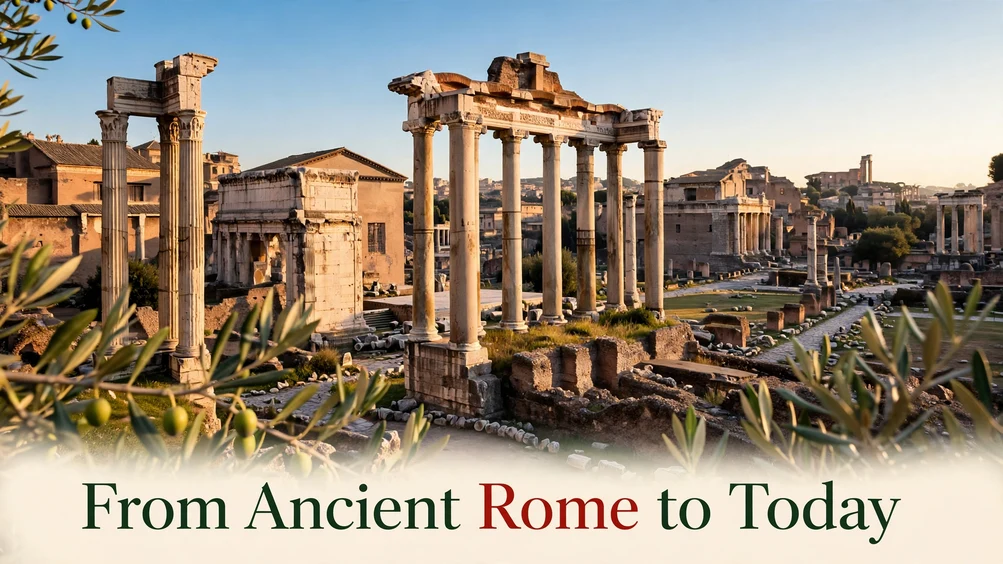
Serena has been in use since Roman times and never left Italy. It began as a Latin word for clear weather, became a personal name in the late empire, and stayed in Italian families through the Middle Ages and the Renaissance. English poets picked it up centuries later, but Italy kept it the whole time.
Serena in late Rome
The best-known Roman Serena married Stilicho, the general who defended the Western Empire around the year 400. She was the niece of Emperor Theodosius I, and her life placed the name at the center of late Roman power. Her story shows the name was already a real personal name by then, not just a Latin word waiting to be used.
Through the Middle Ages and the Renaissance
After Rome fell, Serena stayed in Italian use through the church and the noble families. The saint kept it in calendars, and the Latin root kept it familiar to anyone who read or prayed in Latin. It never became a fashion name that rose and crashed; it moved quietly from one century to the next. That quiet survival is why it still feels classic rather than dated.
Spenser’s Serena in The Faerie Queene
English readers met Serena through Edmund Spenser’s The Faerie Queene, published in 1590. Spenser gave the name to a gentle lady in the poem, fitting his habit of naming characters for their virtues. The poem carried Serena into English literature, where it stayed as a literary name for centuries. Shakespeare never used it, whatever some baby-name sites claim; the English literary Serena is Spenser’s.
Serena in the United States: Steady, Then Rising Again
Serena is a steady, familiar name in the United States, ranked 325th for girls in 2025 with 942 births. It peaked around the year 2000, slipped for two decades, and has been climbing again since 2021. It is common enough to feel known, and rare enough that a classroom rarely holds two.
The year 2000 peak
Serena’s American peak came in 2000, when 1,504 girls received the name. The rise through the 1990s was gradual, from a few hundred births a year to more than a thousand, and the peak year put it among the better-known names of its generation. No single event explains the peak; the name simply gathered momentum through the decade and crested at the turn of the century.
The slow climb back
After 2000, Serena eased down year by year, settling near 700 births a year in the 2010s. The decline was gentle, never a collapse, and the name never left the charts. Since 2021 the numbers have risen again, from 810 births that year to 942 in 2024 and 2025. The pattern is a slow return, not a sudden revival, which suits a name that means steadiness.
Where the name stands now
At 325th for girls in 2025, Serena sits in a comfortable middle ground: recognized everywhere, overused nowhere. California gives the name the most births, followed by Texas, New York, Florida, and Pennsylvania, so it is strongest in the largest states and present in all of them. Parents who want a name teachers can pronounce and classmates will remember, without picking a top-ten name, find that balance here.

From Centre Court to the Upper East Side: Famous Serenas
The most famous Serena alive is tennis champion Serena Williams, whose 23 Grand Slam singles titles made the name known in every country. Fiction added its own Serenas, from Gossip Girl’s Serena van der Woodsen to Sailor Moon’s Serena Tsukino. Italy has its own singers, athletes, and actresses carrying the name.
Serena Williams, the name’s modern face
Serena Williams, born in 1981, is the bearer most people think of first, and her career gives the name a second meaning it never had before. Twenty-three Grand Slam singles titles and a Career Golden Slam made her the most successful player of the Open Era. Her power on court sits in sharp contrast to a name that means calm, and parents who pick Serena today often smile at that.
Williams also changed how the name sounds to English ears. Before her, many Americans met Serena in books; after her, they met it on television every summer. That visibility is the main reason the name held its place through the 2000s and 2010s, and it is why the name feels both classic and current at once.
Serena van der Woodsen and Sailor Moon
Television gave Serena two more famous faces. Serena van der Woodsen, played by Blake Lively in Gossip Girl, is the Upper East Side lead whose charm and trouble drive the show. In Japan, Serena Tsukino is the English dub name of Sailor Moon’s heroine, a schoolgirl who becomes a guardian of love and justice. The two could hardly differ, yet both carry the name’s calm surface over a restless life.
The name also appears in The Devil Wears Prada, in Pokemon, and in the Dune novels as Serena Butler. Each use borrows the same quality: a heroine who looks serene while the story around her is anything but. Writers keep reaching for Serena when they want calm on the surface and strength underneath.
Italian Serenas on stage and in sport
Italy has its own Serenas. Serena Brancale, born in 1989, is a singer-songwriter; Serena Daolio, born in 1972, is a soprano; Serena Ortolani, born in 1987, plays volleyball for Italy; Serena Autieri acts and sings; and Serena Grandi, born in 1958, has acted in Italian film for decades. The list runs from opera to pop to sport.
Short Forms That Keep the Calm: Rena, Sera, and Seri
Serena shortens easily, and the short forms keep the calm sound of the full name. Rena is the most used, Sera is the softest, and Seri is the one Italian families reach for with small children. The full name stays the formal choice, and the nickname is the one friends say every day.
Nicknames Italians actually use
Rena is the workhorse nickname: two syllables, easy in both languages, and close enough to the full name that no one forgets the connection. Sera is softer and more intimate, the form a grandmother uses. Seri is the playful one, common with young children, and Ren is the shortest of all. Sere and Sena appear in American lists, but they are rare in Italy.
The variant table
Spelling variants change the look of the name without changing its sound or meaning. The table below gives the forms parents meet most, with the language each belongs to, so you can spot the standard Italian spelling at a glance.
| Form | Language | Notes |
|---|---|---|
| Serena | Italian, English, Spanish | Standard spelling, used in Italy |
| Serina | Italian, English | Common variant, same pronunciation |
| Sereena | English | Double-e spelling, rare |
| Séréna | French | Accent on the first e |
| Serenus | Latin | Masculine form, rare today |
| Serenity | English | Word name, a cousin rather than a variant |
If you like names in this letter, the Italian girl names starting with S page gathers Serena beside Sofia, Sara, and Silvia, so you can compare their sounds before you settle. Serena is the calmest of the group, and that is usually what decides it.
Serenity, the English cousin
Serenity is not a form of Serena; it is the English noun for the same quality, turned into a name. It is longer, more formal, and much more common in the United States than in Italy. Parents who want the meaning spelled out choose Serenity, while parents who want the Italian form choose Serena. The two share a root and a feeling, but only Serena belongs to the Italian tradition.
Choosing Serena: A Calm Name That Fits Any Surname
Serena fits most surnames because its three open syllables end in a vowel and leave room for the surname to land. Say the full name aloud and listen for where the sounds meet; if the surname is long, Serena’s short rhythm balances it, and if the surname is short, the name gives it length. The meaning does the rest.
The sound test with your surname
Try the full name aloud with your surname and listen for where the sounds meet. Serena ends in a vowel, so it flows into surnames that start with a consonant and pauses gently before surnames that start with a vowel.
Long surnames like Esposito or Romano take it well, and short ones like Greco or Bruno gain length from it. If the surname also ends in a, say the pair twice; two a endings can blur, and a middle name with a consonant ending can separate them.
The Williams question
Every parent choosing Serena should expect one question: “Like the tennis player?” The answer is yes. Williams gave the name fame, strength, and instant recognition, and none of it fights the meaning. A child named Serena will hear the comparison all her life, and it will usually come as a compliment. If you want a name nobody associates with anyone, Serena is not that name.
The meaning test
Ask what the name should promise your daughter, and Serena’s answer is calm. Not excitement, not grandeur, just a clear sky and a steady temper. If that is the quality you want her to carry, the name will do its work. For more names built on what they mean, the Italian girl names with meanings collection gathers them by meaning, so you can weigh calm against joy and light.
Frequently Asked Questions
How do you pronounce Serena in Italian?
Italians say Serena as seh-REH-nah, three syllables with the stress on the middle one. The first e sounds like the e in set, the r rolls lightly, and the final a is clear and open. English speakers usually say seh-REE-nah or suh-REE-nuh instead.
Is Serena a saint's name? When is the name day?
Yes. Saint Serena of Rome is a legendary third-century saint whose traditional feast falls on August 16. Her story says she was a Christian in the court of Emperor Diocletian, though historians doubt the claim that she was his wife. Italian families with a Serena still mark August 16 as her name day.
Is Serena popular in Italy?
Serena is well established in Italy, which holds more people named Serena than any other country, with about 160,000 bearers estimated. It is not among the top five newborn names in the latest ISTAT figures, so it reads as a familiar classic rather than a current fashion pick.
What are common nicknames for Serena?
Rena is the most used nickname, followed by Sera and Seri. Ren is the shortest form, and Sere and Sena appear in American lists. The full name stays the formal choice, while Rena and Sera are the forms family and friends actually say.
Is Serena related to the word siren or to mermaids?
No. Serena comes from Latin serenus, meaning clear and calm, while the Greek word for the mythical sirens is Seiren. The two words sound alike but have no shared origin. A siren lures sailors to danger, while serenus describes a sky with no danger in it.
Conclusion
Serena means “clear, tranquil, serene”, and it has meant that since Roman times, when serenus described a cloudless sky. It carries a saint’s name day on August 16, an Italian pronunciation of seh-REH-nah, and a history that runs from the late Roman Empire through Spenser to Serena Williams. It is a calm name with a strong modern face, and it fits a daughter at every age. The next name in this series, Valentina, means “strong, healthy, and vigorous”: see what Valentina means in Italian.


